


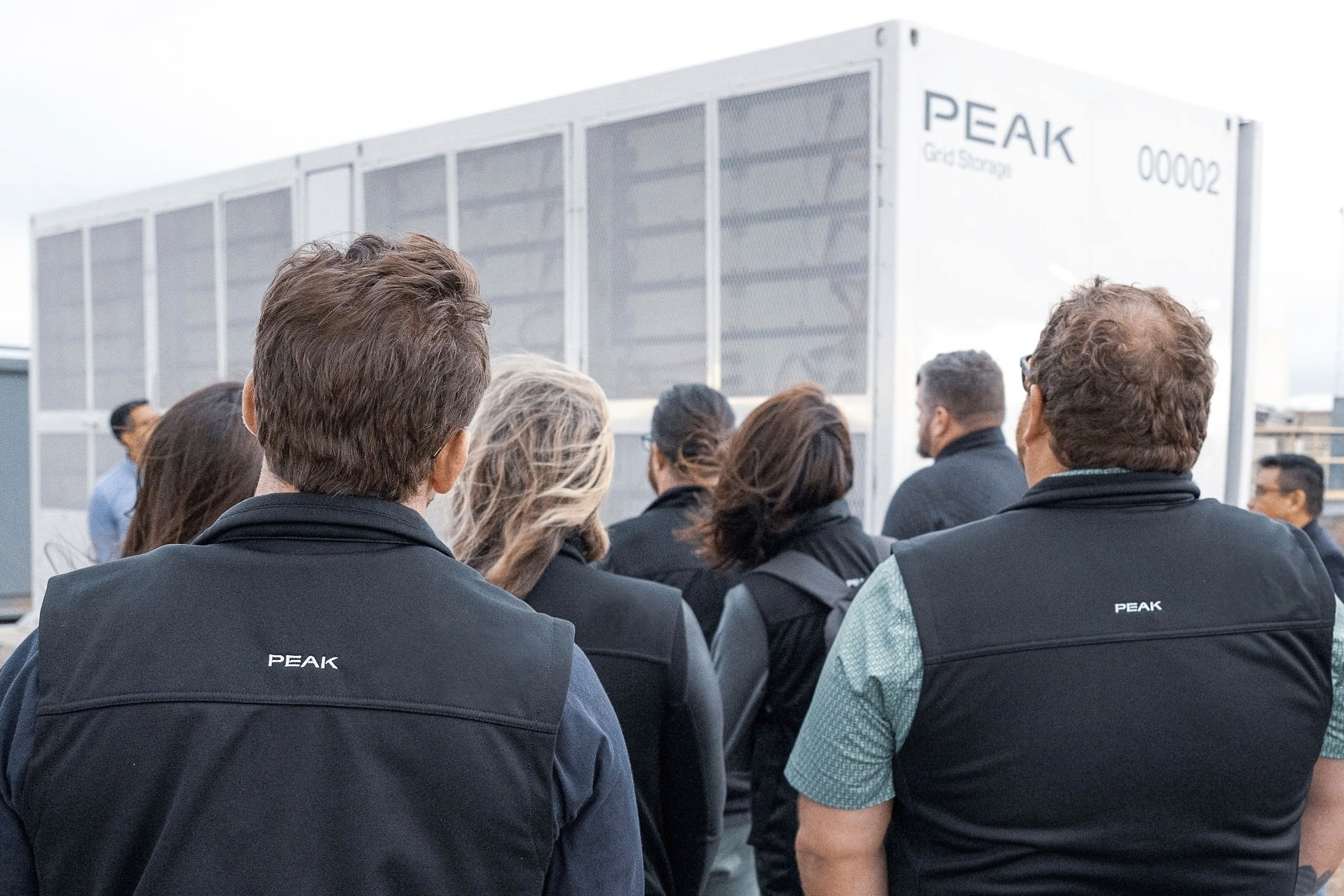
In a major boost to the growing sodium-ion battery sector, Peak Energy has signed a multi-year agreement with Jupiter Power LLC for the supply of up to 4.75 GWh of advanced sodium-ion battery energy storage systems (ESS). The deal, valued at over $500 million, marks one of the largest commitments to sodium-ion technology in the global grid-scale storage market.
Under the phased contract, Peak Energy will deliver approximately 720 MWh in 2027, which will become the largest single deployment of sodium-ion battery systems announced to date. The agreement also includes an option for an additional 4 GWh of storage capacity between 2028 and 2030.
Peak Energy’s latest sodium-ion ESS is built on its proprietary NFPP (sodium-ion phosphate pyrophosphate) chemistry and features a fully passive cooling design that reduces auxiliary power consumption by up to 97%. The company claims the system offers nearly 30% better cell degradation performance over 20 years, significantly lowering operations and maintenance expenses compared to current lithium-ion-based installations.
CEO and Co-Founder Landon Mossburg highlighted sodium-ion’s potential to meet rising power demands from the hyperscale and AI sectors.
“From day one, we believed sodium-ion would be the winning technology for grid-scale storage. Deploying the world’s largest sodium-ion system with one of the nation’s top IPPs proves that sodium is ready for today and will dominate the future,” he said.
Jupiter Power CTO Mike Geier emphasized the importance of supporting domestic battery manufacturing.
“Peak Energy’s approach to battery innovation is a potential game changer. We are excited to partner with them to expand reliable, dispatchable energy solutions across the U.S. grid,” he noted.
The agreement comes shortly after Peak Energy launched its first commercial sodium-ion ESS and delivered the first grid-scale sodium-ion system to the U.S. electric grid earlier this year. The company is also strengthening its domestic supply chain by expanding operations across California and Colorado.
Industry analysts view the deal as a significant validation of sodium-ion technology, which is being positioned as a cost-effective, more sustainable alternative to lithium-ion for large-scale storage.


