


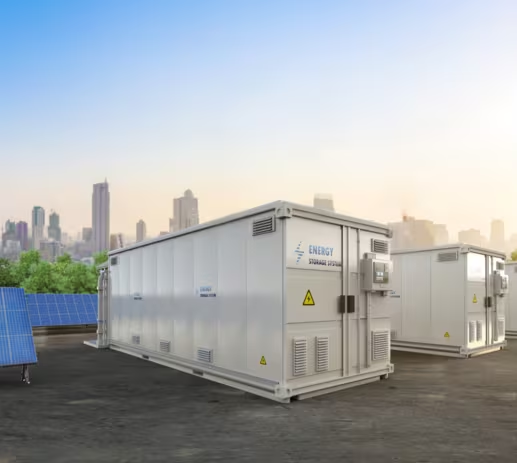
Battery energy storage is increasingly recognised as a vital component of the UK Government’s strategy to achieve a low-carbon future. As outlined in the Clean Power 2030 action plan, battery storage is viewed as essential for maximising the contribution of renewable energy and addressing the country’s rising electricity needs. For businesses, the integration of battery storage is becoming critical to the effective adoption of onsite renewable energy solutions. This development highlights the growing importance of battery storage in supporting a more resilient and cost-efficient energy future for organisations.
The business case for distributed energy solutions
Distributed energy systems are playing an ever-larger role in helping businesses and organisations — from schools and shopping centres to stadiums, warehouses, and factories — decarbonise. Driving the shift toward onsite renewables is the need to move away from fossil fuels, reduce exposure to volatile energy prices, and meet decarbonisation and ESG (Environmental, Social, and Governance) commitments.
We’ve been involved in projects across a wide range of sectors and have seen that rooftop solar can be deployed rapidly, often within just weeks of contract signing. Many projects are set to go live in 2025, offering immediate benefits.
While solar energy remains the primary focus for many businesses, there is growing interest in battery storage solutions that enhance energy security within a renewable energy landscape characterised by intermittent generation. Increasingly, companies are recognising the benefits of combining solar power with battery storage to maximise the onsite consumption of clean energy, strengthen their energy resilience, and contribute to overall grid stability.
Battery storage: transforming energy management
Battery storage directly addresses the challenges posed by the variable nature of renewable generation by storing surplus power for use when needed. Although current commercial battery solutions cannot make businesses entirely independent from the grid, onsite energy storage significantly enhances a company’s ability to navigate time-of-use tariffs by deploying stored power during peak periods. With smart energy management, organisations can realise substantial cost savings while reducing their carbon footprint.
Moreover, battery storage strengthens energy security at a time when the grid is under increasing strain and extreme weather events are raising the risk of outages. This resilience is critical for energy-intensive operations, such as data centres and industrial facilities, where uninterrupted power is essential and layered backup systems are a must.
Making onsite renewables and storage accessible
Combining onsite renewables with battery storage is crucial for businesses seeking to cut energy costs and increase their energy security — and it’s becoming more accessible than ever.
New funding models, particularly Power Purchase Agreements (PPAs), have made technologies like solar and wind attractive options. For instance, rooftop solar installations can now be delivered with zero upfront capital, enabling businesses to start saving almost immediately. Battery storage systems can also be included under the same PPA framework, offering an even more compelling solution as businesses face rising energy costs and greater competition.
Further boosting the case for onsite battery storage are regulatory changes such as P415, a proposed update to the UK’s Balancing and Settlement Code. This change would allow onsite batteries to trade flexibility in the wholesale market through Virtual Trading Parties (VTPs) without having to go through energy suppliers — opening new revenue streams and potential savings for businesses. Although final details are expected later this year, we are actively exploring how this could create additional value for customers with solar and battery installations.
Meanwhile, the cost of both renewable energy and battery technology has plummeted — battery storage costs have fallen by around 50% over the past 12 to 18 months. This steep decline is further enhancing the financial and operational case for integrating battery systems with solar, helping businesses cut energy bills, reduce dependence on the grid, and protect themselves from price shocks while building energy resilience.
Prioritising safety and performance
Naturally, battery storage systems and other renewable energy assets are subject to stringent safety standards, requiring careful monitoring and maintenance throughout their operational life. AMPYR Distributed Energy collaborates with trusted battery manufacturers to ensure high levels of safety and performance, implementing rigorous installation standards that align with best practices and insurance requirements. Continuous monitoring and maintenance are incorporated into the Power Purchase Agreement (PPA), providing customers with peace of mind, ensuring regulatory compliance, and maintaining optimal asset performance over time.
The path to a secure, sustainable future
The demand for clean energy is fuelled not only by environmental responsibility but also by the need for greater energy independence and security. Businesses that leverage onsite renewable energy solutions will benefit from lower energy costs and improved resilience. More broadly, the expansion of onsite solar and battery storage systems will contribute to the creation of a decentralised, efficient energy network — one better equipped to shield consumers from the kinds of extreme energy price swings that have become increasingly common in recent years.


